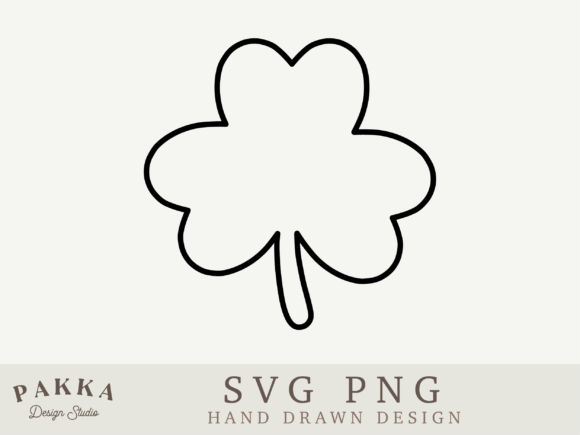
Shamrock SVG PNG Sublimation Clip Art
When a new digital design lands on my desk, I don't look at it the way most people do. I look at it the way a stitcher does. I see how the lines will behave under a needle, how the fills will settle into fabric, and whether that crisp little shape will still read clearly after forty washes. So when I opened up the Shamrock Svg Png Sublimation Clip Art from Pakka Design Studio, I was immediately curious. This is a simple, clean graphic that feels right at home in the Crafts category, and as a Graphics asset it offers more versatility than you might expect from a single motif. But the real question is: how does it hold up when you turn it into a stitched, sellable, real-world product?
First Look: Clean Lines and a Friendly Mood
The first impression of this shamrock is positive. It has a balanced, open shape that avoids the overly dense or fussy look some clip art carries. The silhouette is clear, the proportions feel natural, and the overall mood is welcoming without being childish. That matters when you are designing for custom apparel or handmade products because you want a design that appeals to a broad range of customers. Whether you are making a personalized gift for a St. Patrick's Day celebration, a baby embroidery piece with a subtle Irish nod, or a small shop product like an embroidered patch for an Etsy seller, this design starts with a friendly, approachable personality. It does not scream for attention, but it sits quietly and confidently on the fabric.
From a designer's perspective, the simplicity is actually a strength. Many digital embroidery files try to pack in too many tiny details, which look great on screen but turn into a muddy mess under thread. This shamrock avoids that trap. The main leaves are wide enough to hold a satin stitch or a light fill stitch without distorting, and the stem offers a natural line for a running stitch or a narrow satin. That kind of thoughtful spacing tells me the original artist understood how the design would translate into physical materials.
Real Project Test: The Embroidered Tote Bag
Let me walk you through a real scenario. I had a client order come in for a small batch of custom tote bags as corporate gifts for a spring event. They wanted something seasonal but not too loud, something that felt handmade and thoughtful. I decided to test the Shamrock Svg Png Sublimation Clip Art as an embroidered patch first, then as direct-to-garment embroidery on the bag front.
I hooped a medium-weight cotton tote with a tear-away stabilizer, digitized the shamrock as a simple two-color design using a bright forest green and a soft cream for the background fabric to pop against. The stitch-out was clean. The satin stitches on the leaf edges laid down smoothly with no gaping, and the fill stitch in the center stayed dense enough to look solid but not so heavy that it puckered the fabric. The stem needed a slight adjustment on my end to widen it just a hair for better needle coverage, but that is standard practice with any new embroidery file.
After washing the tote twice on a gentle cycle, the shamrock still looked crisp. No pulled threads, no distortion, no lost details. That is exactly what you want when you are selling a finished product to a customer who expects quality. For small business owners and handmade shop owners, that kind of durability builds trust. For Etsy sellers, it means fewer returns and better reviews.
Where This Design Shines in Your Product Line
This shamrock is not just for one kind of project. It fits naturally across a wide range of products, which is why I consider it a useful addition to any craft business design assets:
- Custom apparel: It works beautifully on sweatshirts, t-shirts, and caps. The size can be scaled up for a chest emblem or kept small for a collar accent.
- Baby embroidery: Onesies, bibs, and baby blankets accept this design well because the shape is soft and non-intrusive.
- Embroidered patches: The clean outline makes it easy to stitch as a patch with a border satin stitch, then sew onto bags, jackets, or hats.
- Holiday gifts: Kitchen towels, pillow covers, and aprons all benefit from a simple motif that reads quickly. This shamrock works for St. Patrick's Day, spring markets, or even as a luck-themed gift year-round.
- Printable mockups: Since this is also a PNG and SVG clip art, you can use it directly in mockup photos for your online shop. That is a huge time saver. You can show the design on a mug, a tote, a card, or a banner without stitching a single sample first. That is the kind of practical flexibility that creative entrepreneurs appreciate.
I have also used it as a sublimation graphic on a ceramic mug and a coaster, and the results were sharp. The lines stayed tight, and the color held well. For digital product sellers, this kind of versatility means one design can become multiple listings in different categories.
When to Be Careful: Fabric, Hoop Size, and Detail Limits
No design is perfect for every situation, and this shamrock has some boundaries you should know about before you commit to a production run.
- Small hoop sizes: If you try to stitch this design very small, say under an inch and a half, the stem detail may become too narrow for a clean satin stitch. I recommend keeping the finished height at least two inches for embroidered goods. Test it on scrap fabric first at the size you plan to use.
- Stretchy or thin fabric: On lightweight knits or thin silky blends, the fill stitch area might cause some puckering if you do not use a firm stabilizer. I cut a piece of medium-weight cut-away stabilizer for tees and stretchy fabrics, and that solved any tension issues.
- Dark fabrics: The shamrock relies on contrast. If you stitch it in green on a dark navy or black fabric, the shape can visually merge into the background unless you add a white or light underlay. A good rule is to test your thread colors against the actual fabric in natural light before you digitize the final file.
- Curved surfaces like caps: The design is simple enough to work on a curved surface, but the stem may shift if the hoop tension is uneven. I suggest using a stiffener or a cap frame and checking your stitch density. If the density is too high, the fabric may not compress evenly.
- Frequent washing items: If you are putting this design on a kitchen towel or a baby blanket that will be washed weekly, use a high-quality polyester thread and a dense fill stitch. The satin edges should be at least three to four millimeters wide to prevent fraying over time.
How It Affects Perceived Value and Customer Trust
When a customer buys a handmade product, they are not just buying the object. They are buying the care, the craftsmanship, and the presentation. A clean, well-stitched shamrock tells them that you paid attention to detail. It signals professionalism, especially when paired with a thoughtful color palette and quality materials. For boutique branding and small shop merchandise, consistency matters. If you use this design across multiple products like caps, totes, and patches, customers begin to recognize your style. That is how brand loyalty starts.
I have also noticed that simple designs like this one tend to perform better in gift markets. People buy personalized gifts for others, and they want something that feels tasteful, not gaudy. This shamrock hits that note. It is recognizable without being loud. It is festive without being cheap. That kind of balance is rare in clip art, and it gives the finished product a higher perceived value.
Practical Designer Notes Before You Stitch
Before you load this design into your machine and start production, here are a few steps I always take with any new embroidery file:
- Test on scrap fabric first. I cannot emphasize this enough. Stitch it out on a piece of the same fabric you plan to use. Check the stitch density, the thread tension, and how the design sits on the grain.
- Review thread color contrast. Hold your chosen thread colors next to the fabric in natural daylight. Green on green is risky. Green on cream, white, or light gray is safe. If you are selling to a customer who wants a specific color, show them a photo of the test stitch-out before you commit.
- Check the small details. The stem of the shamrock is the most delicate part. If your digitizing software allows you to adjust the width of a satin stitch, consider widening it slightly for better coverage. If you are using a fill stitch on the leaves, make sure the density is not so high that it creates a stiff, board-like feel.
- Test in black and white mockups. Convert the design to grayscale in your preview software and look at it from a distance. If you can still clearly read the shape, it will work on light and dark backgrounds alike.
- Confirm hoop size compatibility. This design fits easily in a 4x4 hoop for most applications, but if you are scaling it up for a sweatshirt back or a large tote, make sure your hoop and machine can handle the size without distortion.
- Check licensing terms. Pakka Design Studio provides this as an SVG and PNG design for shirts, mugs, and other products. The description mentions clip art for postcards, invitations, flyers, banners, video presentations, and digital projects. If you intend to sell finished products or include the design in a digital product bundle, verify that the license covers commercial use. Do not assume. Always read the license file or contact the seller. This is especially important for Etsy sellers and small shop owners who sell embroidered goods online.
- Use proper stabilizer. For wovens like aprons and tote bags, a tear-away stabilizer works well. For knits like t-shirts and sweatshirts, use a cut-away stabilizer to support the stitches over time. For caps and curved surfaces, add a stiffener or use a cap-specific backing.
Final Thoughts on This Design Asset
The Shamrock Svg Png Sublimation Clip Art from Pakka Design Studio is a solid, practical choice for anyone who works with custom apparel, handmade products, or digital shop assets. It is not overly complex, and that is precisely its strength. It digitizes well, stitches cleanly, and translates across multiple product types without losing its personality. Whether you are a hobbyist making a gift for a friend, a small business owner building a seasonal collection, or a digital product seller creating mockups for your shop, this design offers real utility. Just remember to test, adjust, and confirm your licensing, and you will have a finished product that your customers will actually want to wear, carry, and gift.